Custom Hat Mold Custom Tooling, Since 1987: How Over a Thousand Shapes Cut Your Lead Time
Since 1987, Jiuwang's hat mold library spans over a thousand shapes. First sample in 5–7 business days;
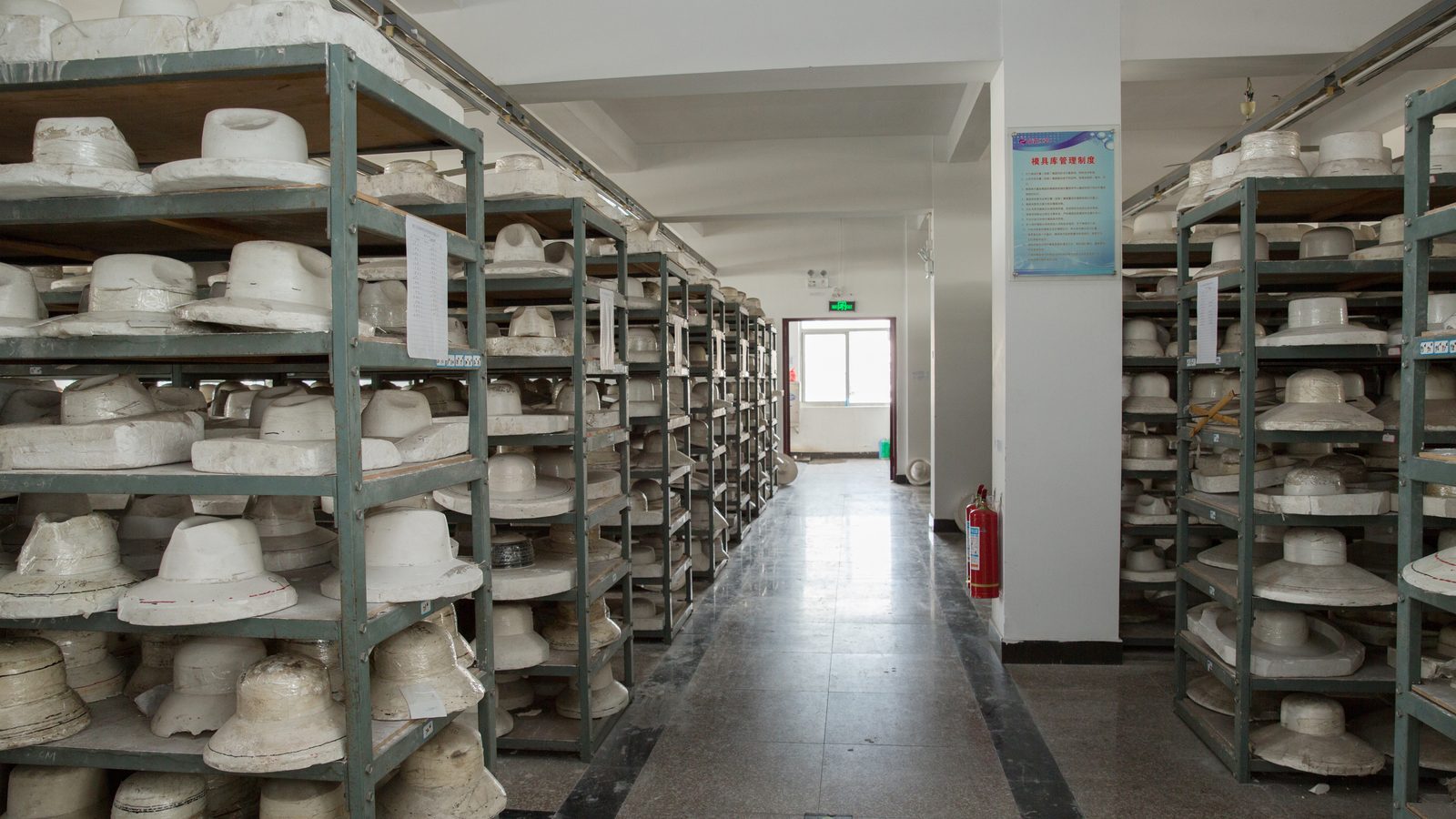
When a brand partner asks how fast we can turn a first sample, the honest answer depends on one question before all others: does the shape already exist in our hat mold archive? Since 1987, we have been building and cataloguing every block and form that left our floor. Across decades of OEM and ODM work, that collection has grown to over a thousand molds — and as a hat mold manufacturer, custom tooling is something we reach for only when the catalogue genuinely cannot serve the brief.
Why Does a Hat Mold Manufacturer Custom Archive Span Over a Thousand Shapes?
A mold is not a commodity. Each one encodes a crown height, a brim angle, a circumference tolerance, and a set of structural expectations about which materials will cooperate and which will fight. When we retain a mold from a program built ten seasons ago, we are retaining institutional knowledge about how that shape behaves on a braiding machine and how it responds to steam-setting. For a brand sourcing an original style, that retained knowledge means the first sample we send is not a guess — it is the product of a shape that has already been proven. We encourage early-stage partners to browse our hat collection and bring silhouette references to our team before assuming a custom block is needed.
How Does Hat Mold Manufacturer Custom Tooling Work at Jiuwang?
When a brief genuinely calls for a shape outside our existing library, we open a new block. The cost is $300, and it is returned in full on the bulk order — so for brands that reach production, the tooling is effectively free. The process runs in parallel with the sampling window. We target a first sample in 5–7 business days, which gives the new mold time to be machined and verified before the first hat comes off the press. Our OEM/ODM process covers this in more detail, but the short version is: tooling decisions happen in the first forty-eight hours of a project, not as an afterthought when sampling stalls.
Revisions to an existing sample follow a similar logic. Three revision rounds are included without additional charge. If a change is significant enough to require a new block — a substantial crown re-cut, a brim that shifts more than a standard tolerance — we treat that as a new mold, not an iteration of the old one. The distinction protects both sides: brands know what they are paying for, and our floor knows what it is building to.
What Role Do Two Factory Bases Play in Hat Mold Manufacturer Custom Programs?
Our mold library lives across both facilities — the Wenling base in Zhejiang and the Phnom Penh plant we opened in 2025. Complex sample work and heritage shapes draw on the senior staff in Wenling, where the longest institutional memory sits. High-volume production orders that rely on a proven block route efficiently to Cambodia. The division is not bureaucratic; it is practical. When a brand orders a shape that we have made before, the mold travels — or a verified copy does — so the spec remains identical regardless of which floor runs the order. We think of the library less as an asset and more as a shared language between two teams who need to make the same hat.
What Should Brands Ask Before Requesting Custom Tooling?
The question worth asking first is whether the shape you need already exists. Browse our hat range, send us a reference image, or describe the silhouette in your tech pack — our team will search the archive before recommending a new block. For brands coming to us through our contact and inquiry page, we routinely attach a shortlist of closest-match shapes from the library to the opening reply. Most of the time, the right mold already exists. When it does not, the $300 path is straightforward, the timeline is predictable, and the decision is reversible at the sampling stage. The library took decades to build. That is the part we cannot replicate in a week — and the part that most directly compresses your time from brief to bulk.