Sourcing at MAGIC Las Vegas 2026: What US Retail Buyers Asked at Our Straw Hat Booth
At Sourcing at MAGIC Las Vegas 2026, US retail buyers asked us about SS27 timing, DDP to warehouse, Cambodia origin and reorder consistency. Our answers, with numbers.
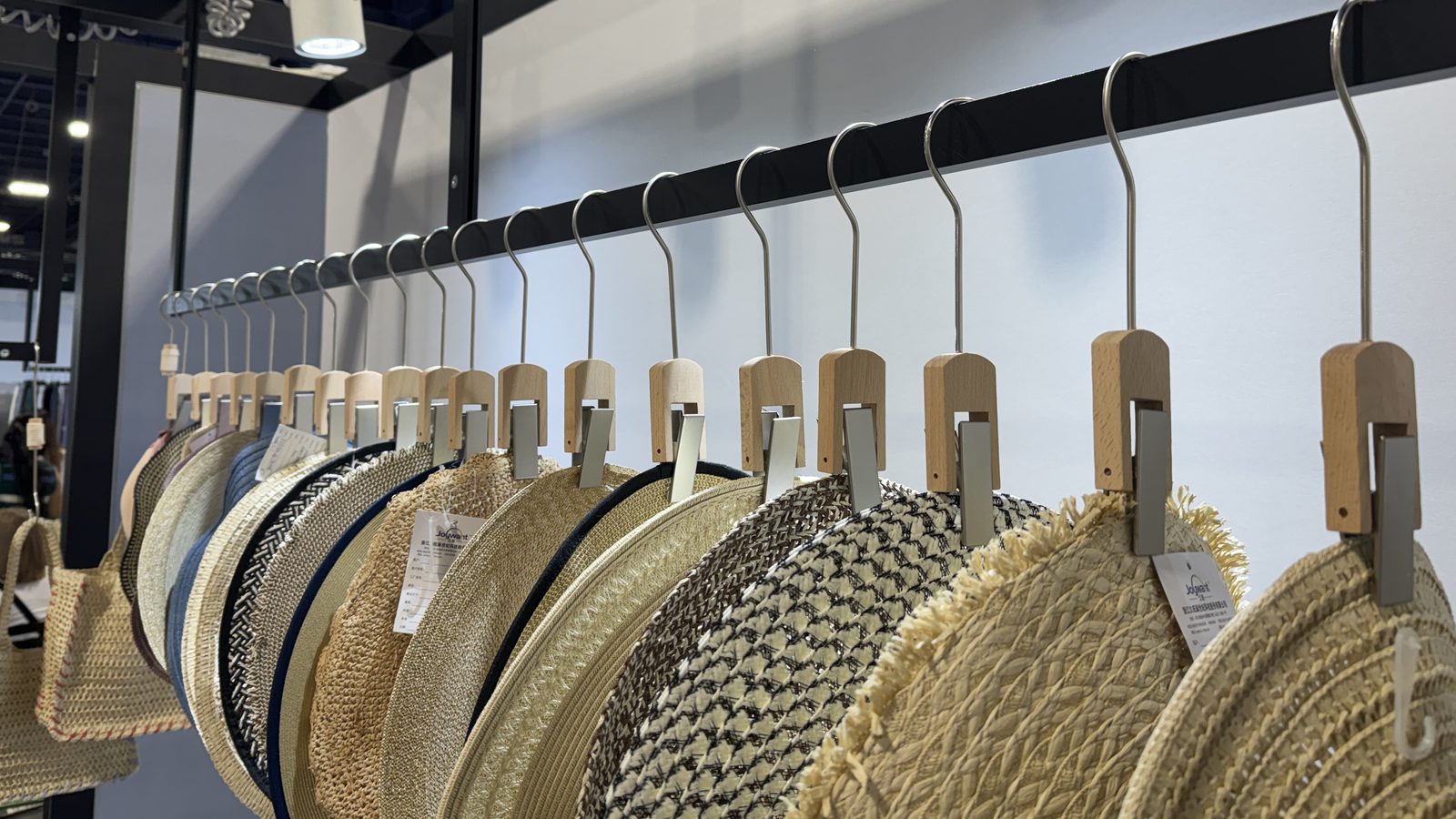
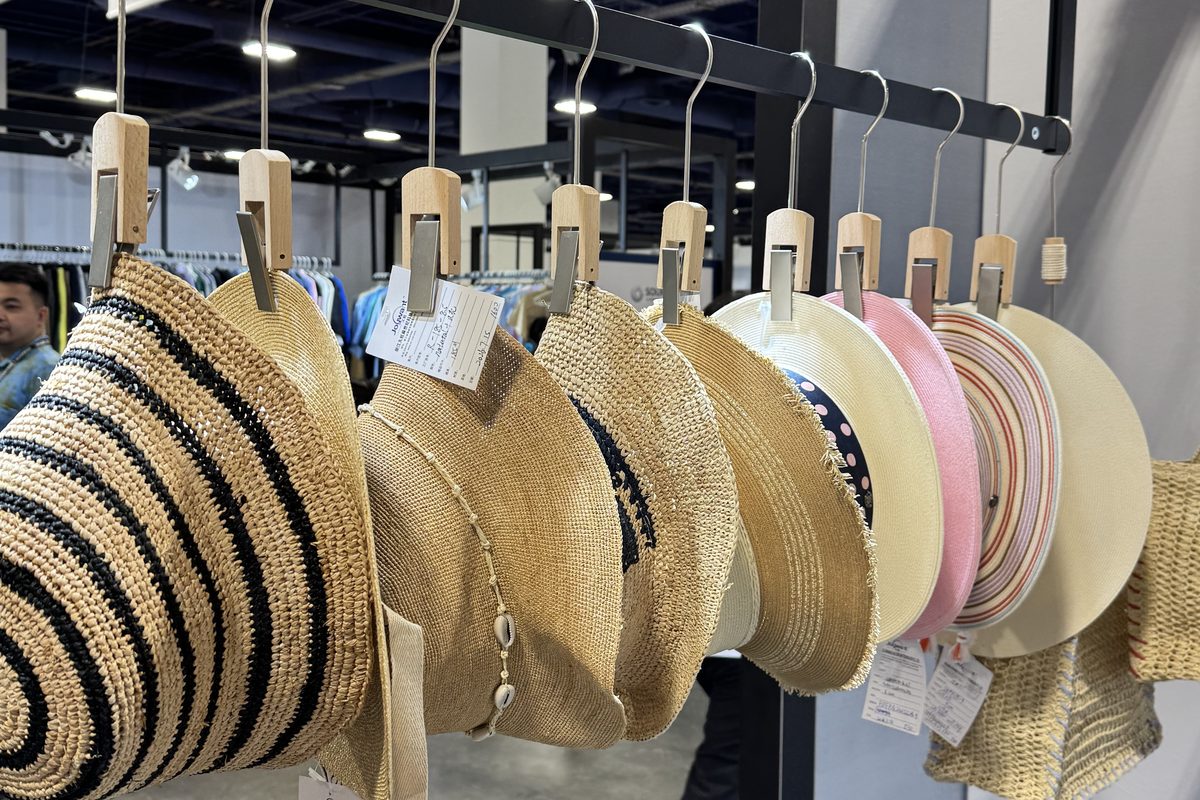
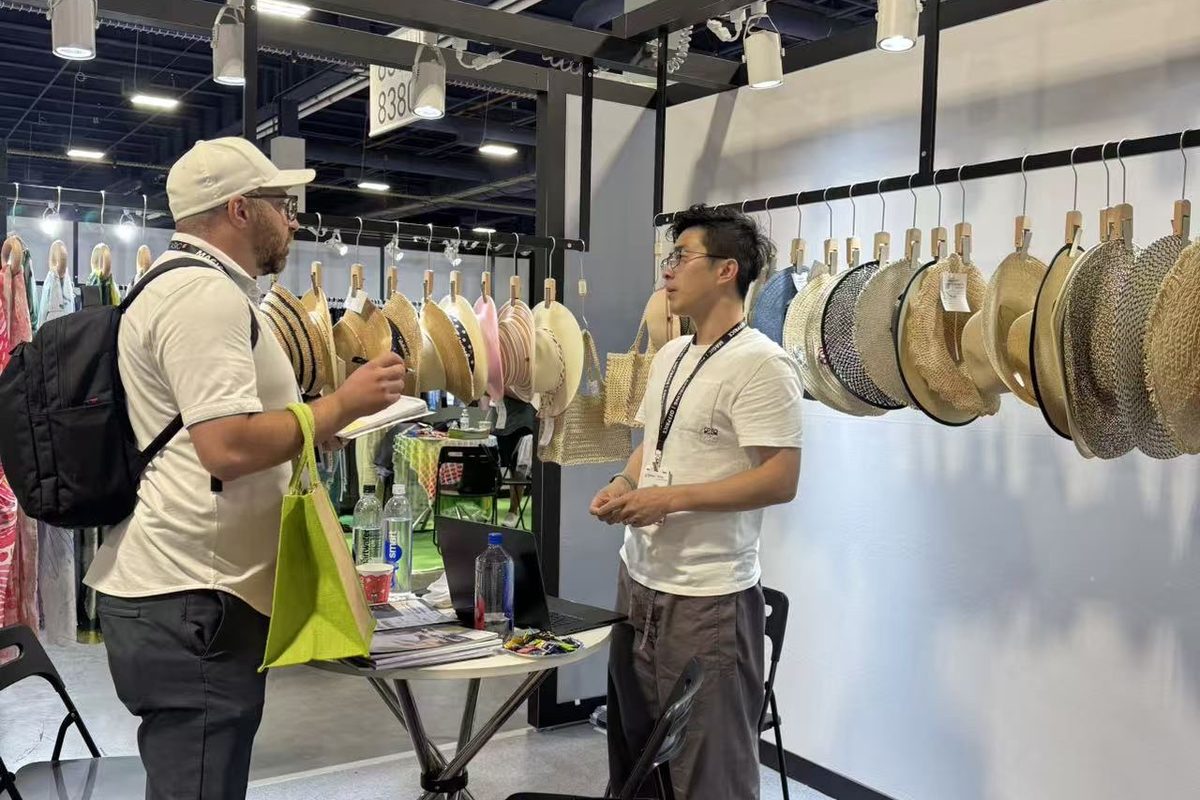
From August 10 to 12 we were at the Las Vegas Convention Center for Sourcing at MAGIC, the finished-goods sourcing floor of MAGIC Las Vegas. Our booth was a black metal frame against grey walls under track spotlights, with one long rail: hats on wooden clip hangers — striped braid, ribbon-trimmed straw, pale and pink wide brims — and beside them round woven bags and totes. Unlike a fabric show, Sourcing at MAGIC is where US retailers and brands come to buy product that is already a product. The buyers and product developers who sat down at our small round tables came from American retail and brand teams; their questions were less about the hats than the schedule and risk around them. These are the ones we heard most, and how we answered.
How Early Should an SS27 Hat Program Start?
Most conversations opened with a calendar. Buyers planning SS27 wanted to know how our development steps sit against their line-review dates. The answer is the one on our customization page: a first sample in five to seven working days, revisions in three to seven with the first three rounds free, and a quotation that holds for 30 days while a range is assembled internally. Once the physical sample is approved, bulk runs 30 to 45 days as a rule, about two months for complex or very large programs. Minimums start at 150 pieces per SKU depending on material — 300 for standard silhouettes, 500 for braid constructions — and sampling carries no minimum. Counted back from a spring floor date, that puts sample approval in the autumn and purchase orders before year end, earlier than some buyers had assumed.
What Does Landed Cost Look Like With a Cambodia Factory?
The second theme was origin. Buyers modelling landed cost across more than one origin scenario wanted to know what we actually run outside China. Since 2025 our Phnom Penh plant — 8,000 square metres, 500 people, four production lines, roughly five million pieces a year, WRAP- and BCI-audited — has carried straw and fabric hat programs alongside Wenling; the reasoning is in our two-factory strategy article. Trade terms follow the same logic: FOB Ningbo or FOB Phnom Penh as standard, CIF where the buyer runs its own forwarding, and DDP, duties paid, to the customer's warehouse where the team would rather work from a landed price. For marketplace sellers, packaging came up at the same table: FBA-ready programs, units bagged and cartons labelled to the platform's requirements, are something we have shipped before. Payment stays 30 percent deposit and the balance against the bill-of-lading copy, whichever plant produces.
How Do We Keep Reorders Consistent With the Approved Sample?
Large-format retail at Sourcing at MAGIC asked a different question about quality: not whether the first run will be good, but whether the third reorder will match it. Two answers. On inspection, our final check runs to AQL 2.5, bulk is not allowed to deviate from the sealed sample, and third-party inspection by SGS, Intertek or QIMA before release is routine — a buyer's own inspector is welcome at either site. On inputs, the biggest source of drift between runs is the braid, and ours is made in-house: more than 5,000 braiding machines and our own paper-yarn line mean the paper and polyester braid on a reorder come off the same setup as the original, not whichever supplier had stock that month. Where a brief calls for recycled content, rPET braid is available on request. The same audited lines — BSCI, WRAP, Sedex, ISO 9001 and ISO 14001, with OEKO-TEX on materials — carry our programs for Costco, Walmart and Target, and the 17 material families behind the rail are stocked year-round.
What We Took Home From Sourcing at MAGIC
Three days on the floor confirmed something about the US market that a fabric show does not show you. Buyers here are not sourcing a material; they are sourcing a finished, packed, delivered SKU, and every question — calendar, origin, terms, inspection — was really about how much of that risk sits with the factory. The hat rail made people stop; the numbers did the rest. Two things we wrote down to look at again after Sourcing at MAGIC: how far ahead of a spring floor date a first proto now needs approval, and how often a DDP landed price, not an FOB unit price, was the number a buyer wanted first. Neither changes what we make in Wenling or Phnom Penh. Both change how early, and in what form, we show it.