Texworld NYC 2026: What East Coast Buyers Asked Us at Javits Center
Texworld NYC 2026 at Javits Center, July 29–31: what East Coast buyers asked us about 150-piece MOQ tiers, Cambodia origin under tariffs, and 5–7 working day sampling.
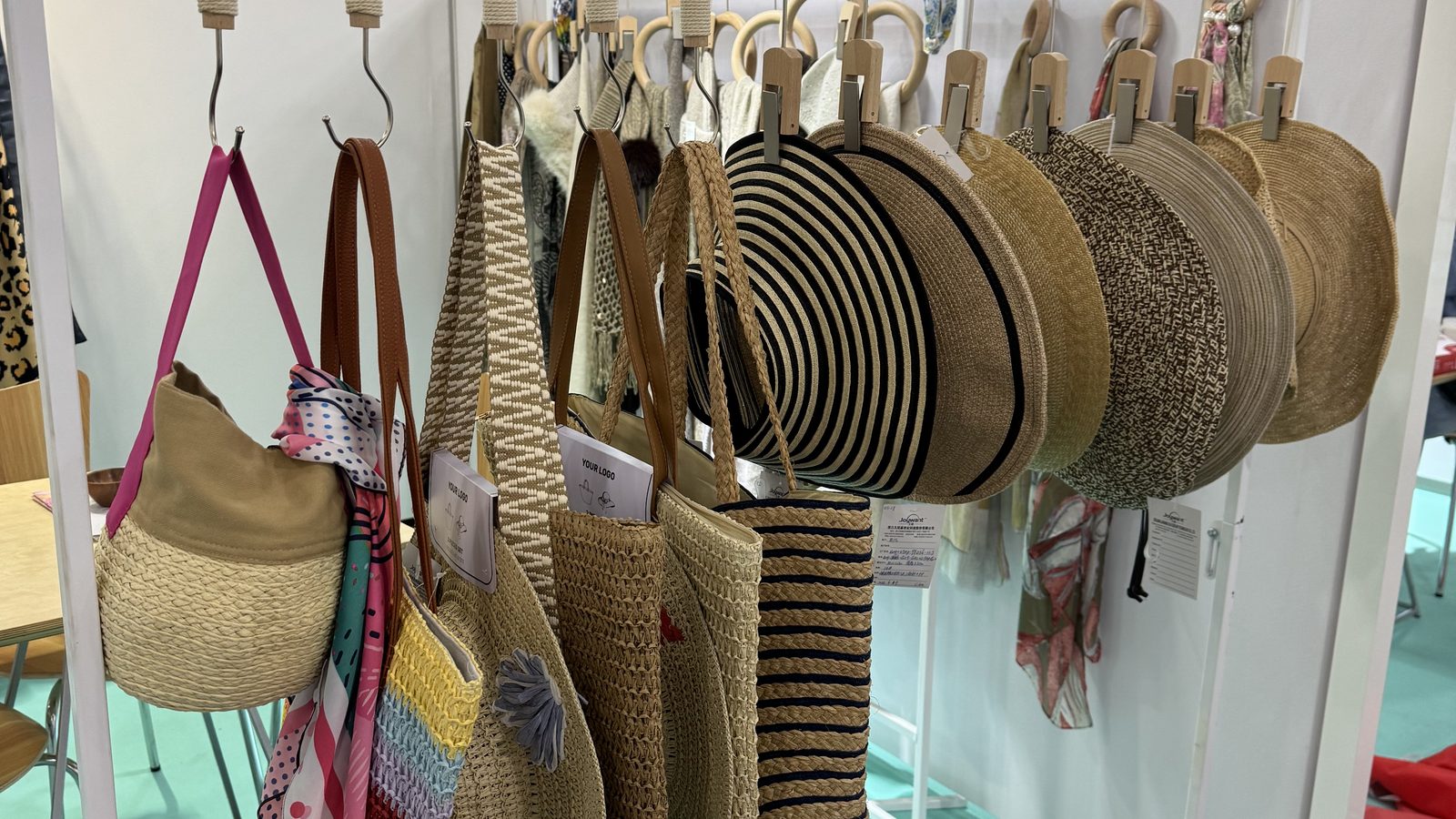
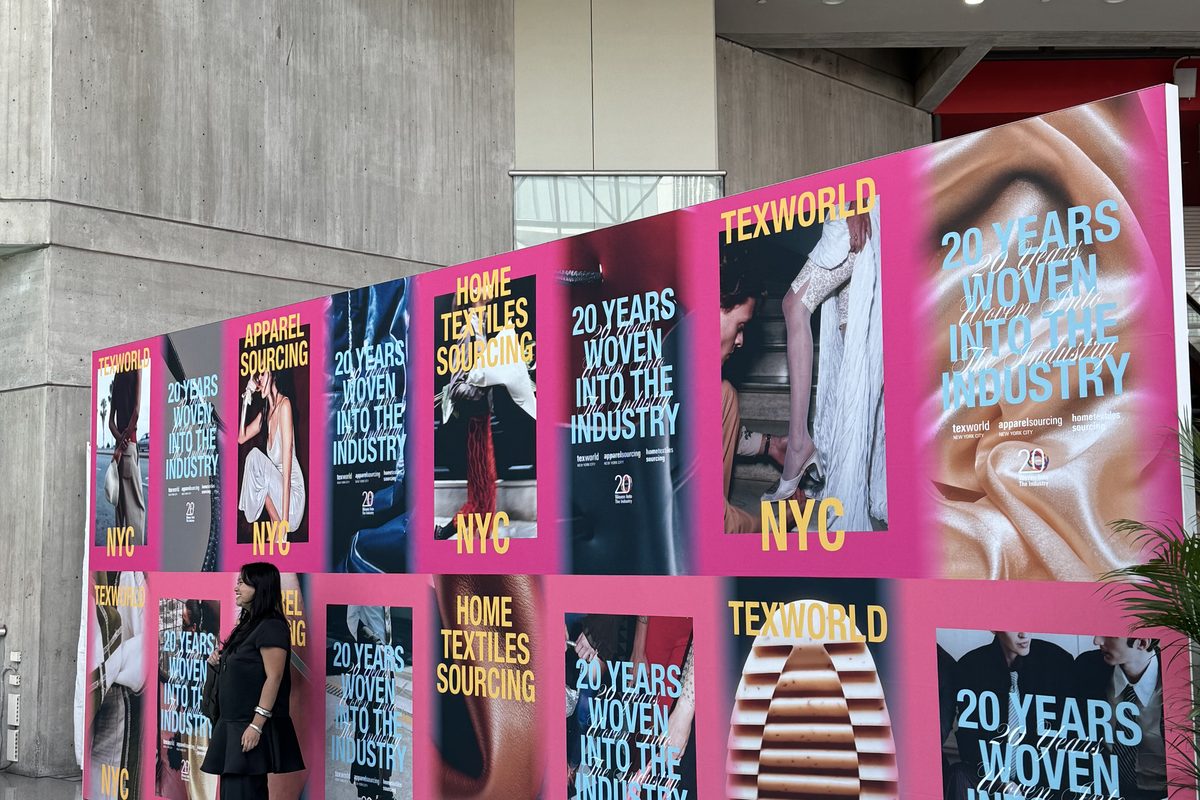
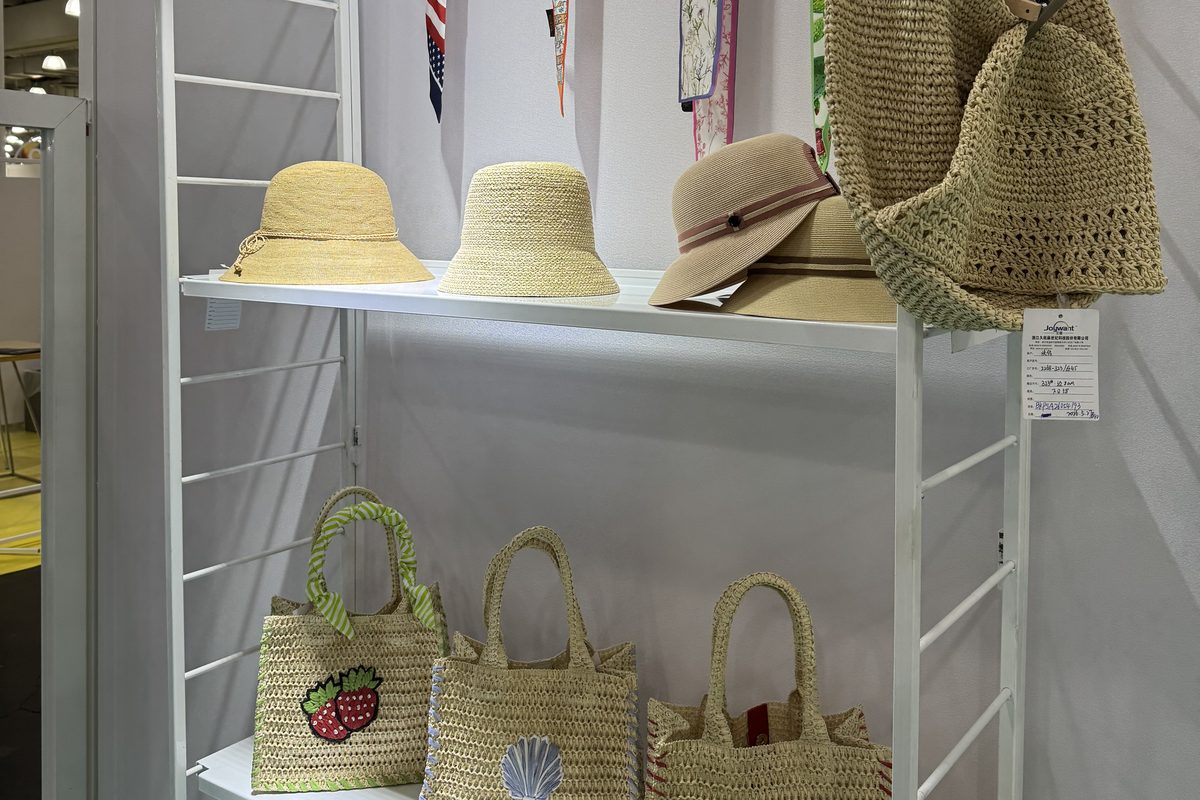
From July 29 to 31, 2026, we set up a white metal display rack on mint-green carpet at Javits Center for Texworld NYC, held alongside Apparel Sourcing NYC and Home Textiles Sourcing. This edition marked the show's 20th anniversary, and the theme wall at the entrance read “20 Years Woven Into the Industry.” On the rails we hung straw fedoras, boaters, wide-brim styles, and bucket hats; beside them, straw totes and crochet bags; on the shelves, a row of mini straw bags embroidered with fruit, shell, and lobster motifs. Three days later, this is what East Coast buyers asked us.
Who Visits a Hat Manufacturer at Texworld NYC?
Texworld NYC leans toward fabric and trim; hats and bags sit in the fashion accessories corner of Apparel Sourcing NYC, which shaped the conversations. Many who stopped at our rack were small brands and DTC labels from across the East Coast, and their most frequent question was about scale rather than style: can a label that sells a few hundred pieces a season work with a factory that produces eight million a year? Our answer, the same one on our FAQ page: minimums start at 150 pieces per SKU depending on material, 300 for standard silhouettes, 500 for braid constructions, and sampling carries no minimum at all. For a first collection we suggested one or two styles on an existing block from our hat collection, branded by embroidery, printing, or heat transfer rather than new tooling.
Why Cambodia Came Up in Tariff Conversations
The second recurring topic was origin. With tariff planning high on US importers' agendas this year, buyers wanted to know where a hat would actually be made. Since 2025 we have run two plants: Wenling, Zhejiang, with 350 people and roughly three million pieces a year, and Phnom Penh, Cambodia, with 500 people, four production lines, and about five million pieces a year. The Phnom Penh factory holds WRAP and BCI, and it lets us quote FOB Phnom Penh as well as FOB Ningbo, with CIF and DDP available. We did not give tariff advice — rates change, and a customs broker is the right source — but we could show exactly which lines run in which country, and that the same block, braid, and finishing standard applies in both. The reasoning behind the split is in our two-factory strategy article.
How Fast Can a Texworld NYC Sample Request Become a Proto?
Show samples create a particular impatience: a buyer who held a straw fedora at Javits Center on Wednesday wants to know when a version in their own colorway and label can be on their desk. Our answer: a first proto in five to seven working days, revisions in three to seven, with the first three rounds of changes free. Quotations hold for 30 days, so the numbers hold while a sample goes back to the buyer's team. Bulk production runs 30 to 45 days after approval, with final inspection to AQL 2.5. Questions also came up about a recycled version of our polyester braid; the honest answer, as our materials page states, is that rPET is available on request rather than as a default. The embroidered mini bags on the shelves prompted decoration questions too; embroidery, printing, heat transfer, and patches are covered in our customization overview.
What We Heard at Textile Talks About Counterfeits and Circularity
On the Wednesday afternoon, part of our team sat in on the Textile Talks session on fake fashion and circularity — how counterfeit product undermines product safety and raises legal risk. The speakers came from trade media, an industry association, and brand legal teams; rather than paraphrase them, here is our own reading as a factory. A counterfeit that enters the resale or recycling stream carries none of the material testing, labeling, or chain of custody a legitimate item does, so a circularity gesture can turn into a liability. Every hat we ship has a traceable path: OEKO-TEX-covered materials, BSCI- and WRAP-audited lines, and third-party inspection by SGS, Intertek, or QIMA when a buyer wants it. That paperwork lets a brand stand behind a product after it leaves the store. Twenty years of Texworld NYC is a long time in sourcing. What struck us on the floor was how little the basic questions have changed — who makes it, how fast, and can you prove it — and how much more precisely buyers now expect them answered.