Texworld Paris 2026: What European Buyers Asked at Booth C345
Three days at Texworld Paris 2026, booth C345: what European buyers asked us about OEKO-TEX materials, REACH testing, DDP to EU ports and 150-piece minimums.
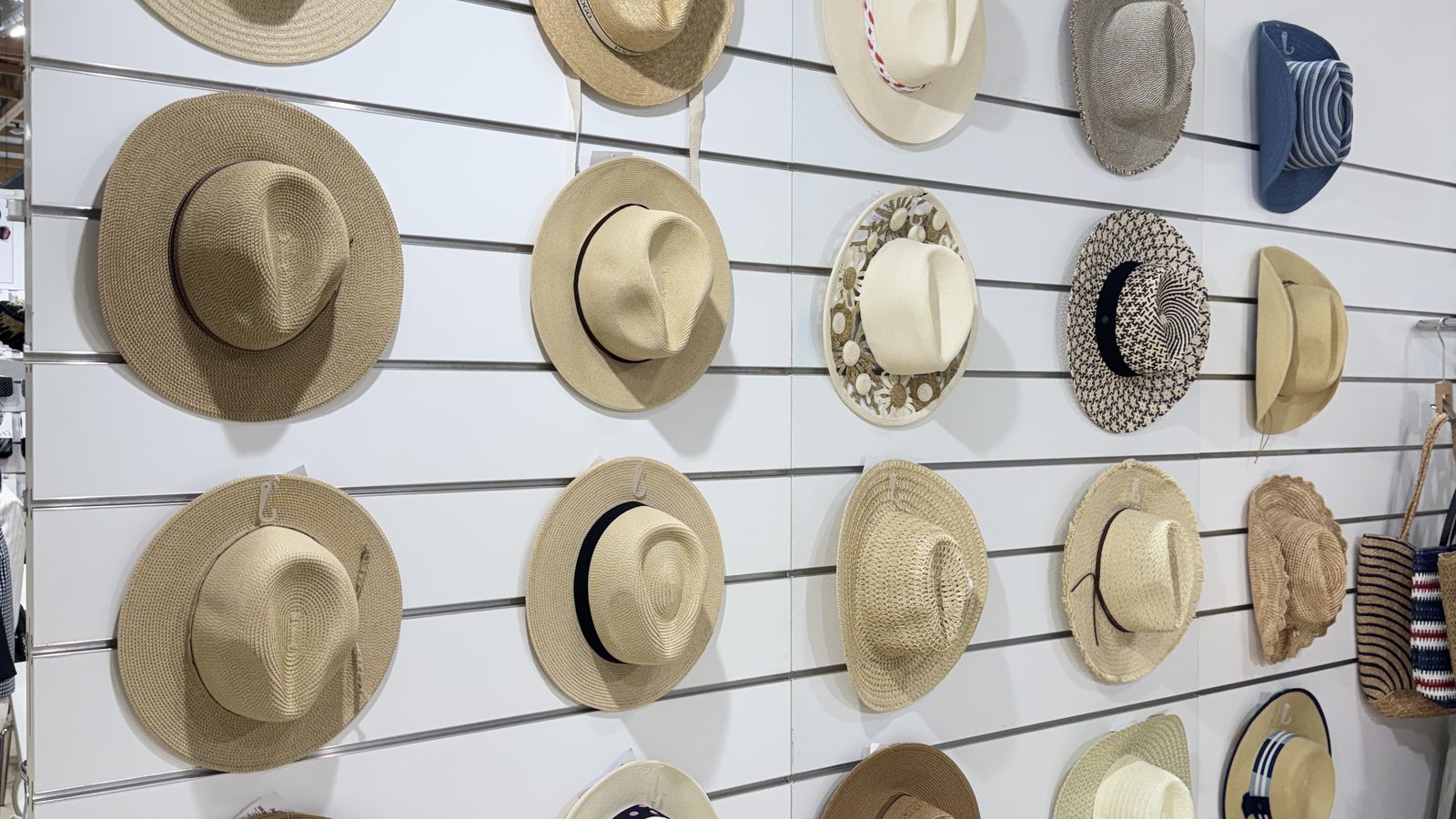
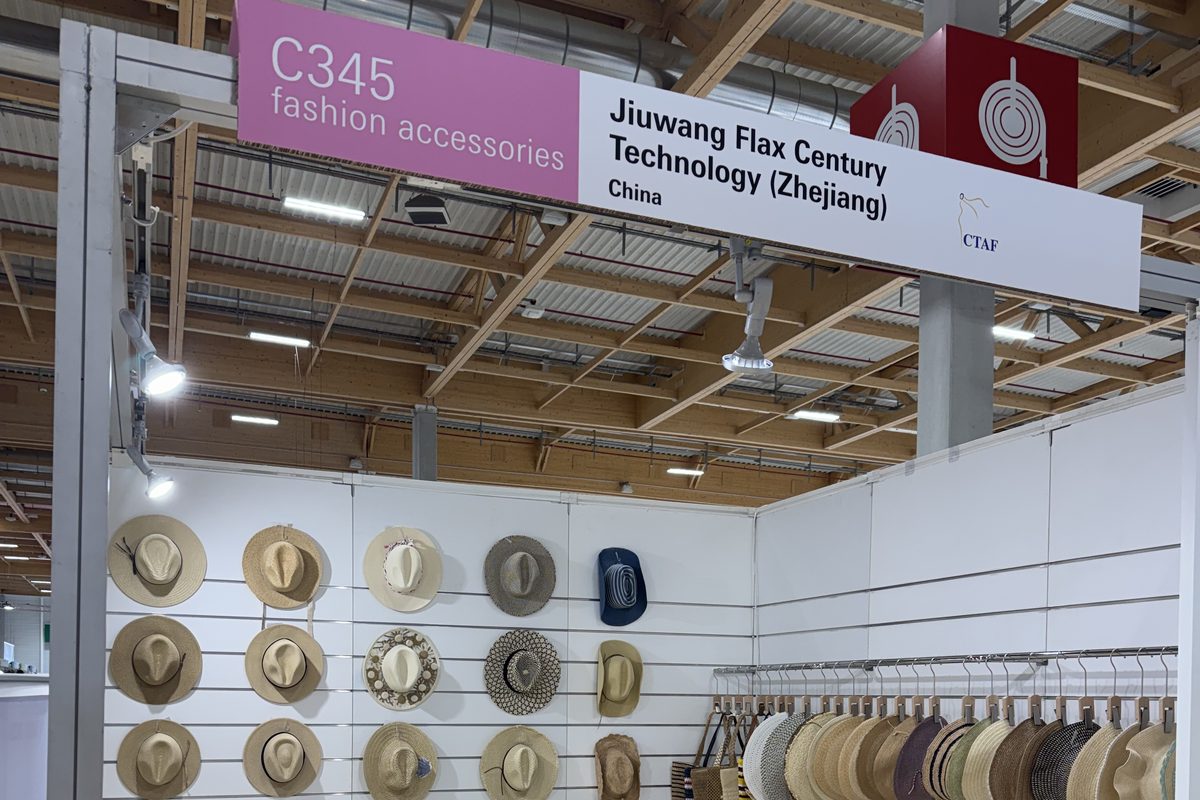
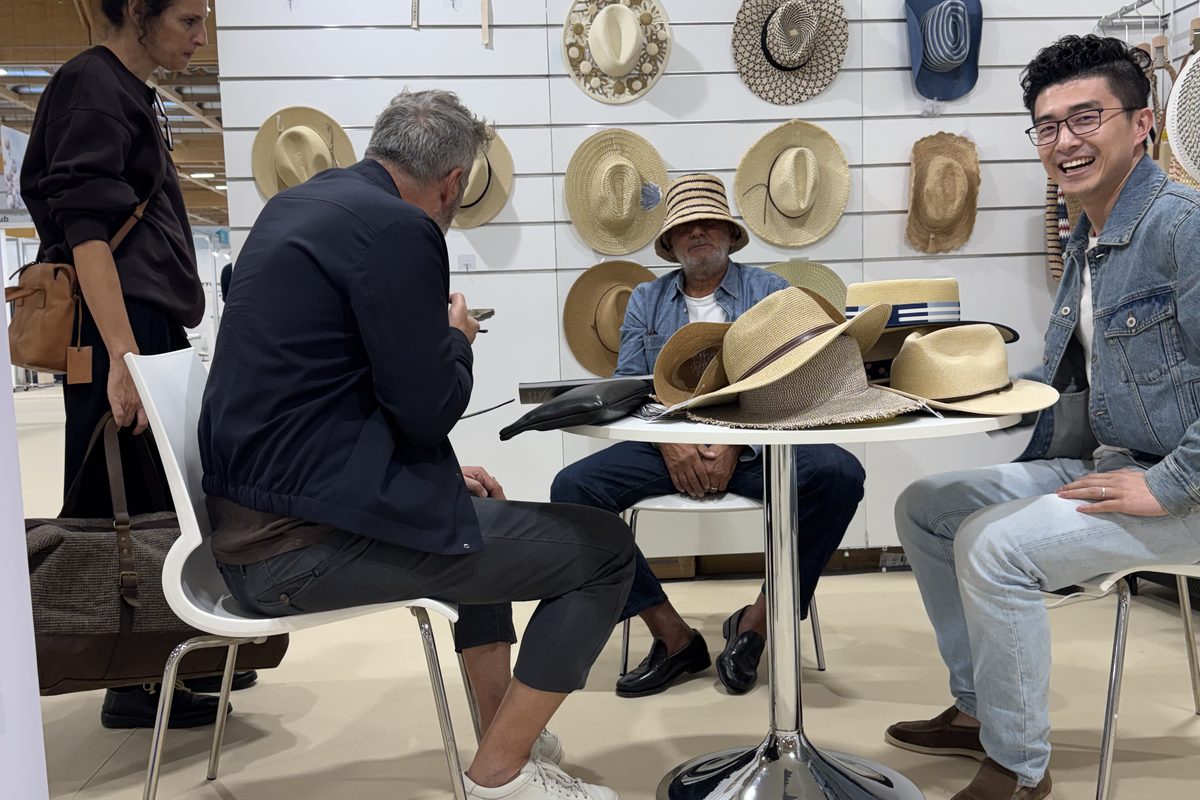
From August 31 to September 2 we exhibited at Texworld Apparel Sourcing Paris, in the fashion accessories zone at Paris Le Bourget, booth C345, under a sign that read Jiuwang Flax Century Technology (Zhejiang), China. The stand was deliberately plain: a white slatwall with hats laid flat in a grid — fedoras, boaters, Panama-style straw, bucket hats, woven-pattern crowns — a side rail of hats and woven bags, and one white round table where visitors could try pieces on. Texworld Paris is really two shows under one roof, Texworld for fabrics and Apparel Sourcing for finished goods, with close to 1,200 exhibitors this edition. We sat in the second one. Three days of table conversations kept returning to a short list of topics, and they were not quite the topics we had heard in New York and Las Vegas a few weeks earlier.
Which Materials Drew the Most Questions at Texworld Paris?
Natural fibers came up before anything else. Visitors picked up the raffia pieces and asked where the fiber comes from; the answer is Madagascar, and we traced that supply chain in our raffia sourcing article. Paper braid was the second most handled sample — the yarn is produced on our own paper-yarn line, which is why we can hold colour and gauge from one season to the next. The 17 material families on the wall split into seven natural, five synthetic and five paper, and the question behind almost every one was the same: is this OEKO-TEX covered? For the materials we stock, yes. Recycled polyester came up as well; it is available on request rather than as standard. And the ribbon hats — a line we have run since 1993 — got their usual second look once visitors saw the UPF 50+ rating on the swing tag.
How Do We Handle REACH Testing and Audits for European Buyers?
Compliance came up early in nearly every conversation, usually before price. Two answers settled most of it. REACH-related third-party testing can be arranged on request through SGS, Intertek or QIMA, against the substance list the buyer's market requires. And the audit trail is already in place: BSCI, WRAP, Sedex SMETA, ISO 9001, ISO 14001 and Higg across the company, plus WRAP and BCI at our Phnom Penh plant, which opened in 2025 and runs four lines. Final inspection is to AQL 2.5 by default, and pre-shipment inspection by SGS, Intertek or QIMA can be booked before release. None of this is new to us; what was new was how often it was the opening question rather than the closing one.
What Do Small-Batch and Designer Orders Look Like?
Paris brought a steady run of independent labels and design studios to our table, and the minimum was the number they wanted before anything else. Our minimums start at 150 pieces per SKU depending on the material, 300 for standard silhouettes and 500 for braid constructions, with no minimum on sampling. A proto takes five to seven working days, revisions three to seven, and the initial three rounds are free. Quotations hold for 30 days and bulk runs 30 to 45 days. Several studios asked how much brand identity could be carried without new tooling; embroidery, printing, heat transfer and leather patches all can, and we walk through each on the customization page. The 150-piece tier is the one we expect the Paris contacts to use most.
What Texworld Paris Taught Us About Shipping to Europe
The last item at almost every table was landed cost. We quote FOB Ningbo or FOB Phnom Penh as standard, and CIF or DDP to European ports on request, with payment at 30 percent deposit and 70 percent against the bill of lading copy; the detail is on our FAQ. We have shipped to most European countries over the years, so the routing itself was rarely the issue — the issue was who carries duty and clearance, and DDP answers it. Three days at Texworld Paris left us with a clear reading of the market: European buyers ask about the fiber, the test report and the audit before they ask about the price, and a factory that can answer all three at the same table has already done most of the work.