Our In-House Braid Hat Factory: The 2012 Decision
Fourteen years inside our braid hat factory in-house: how the 2012 retrofit cut waste twelve percent and energy use sixty to eighty percent per machine.
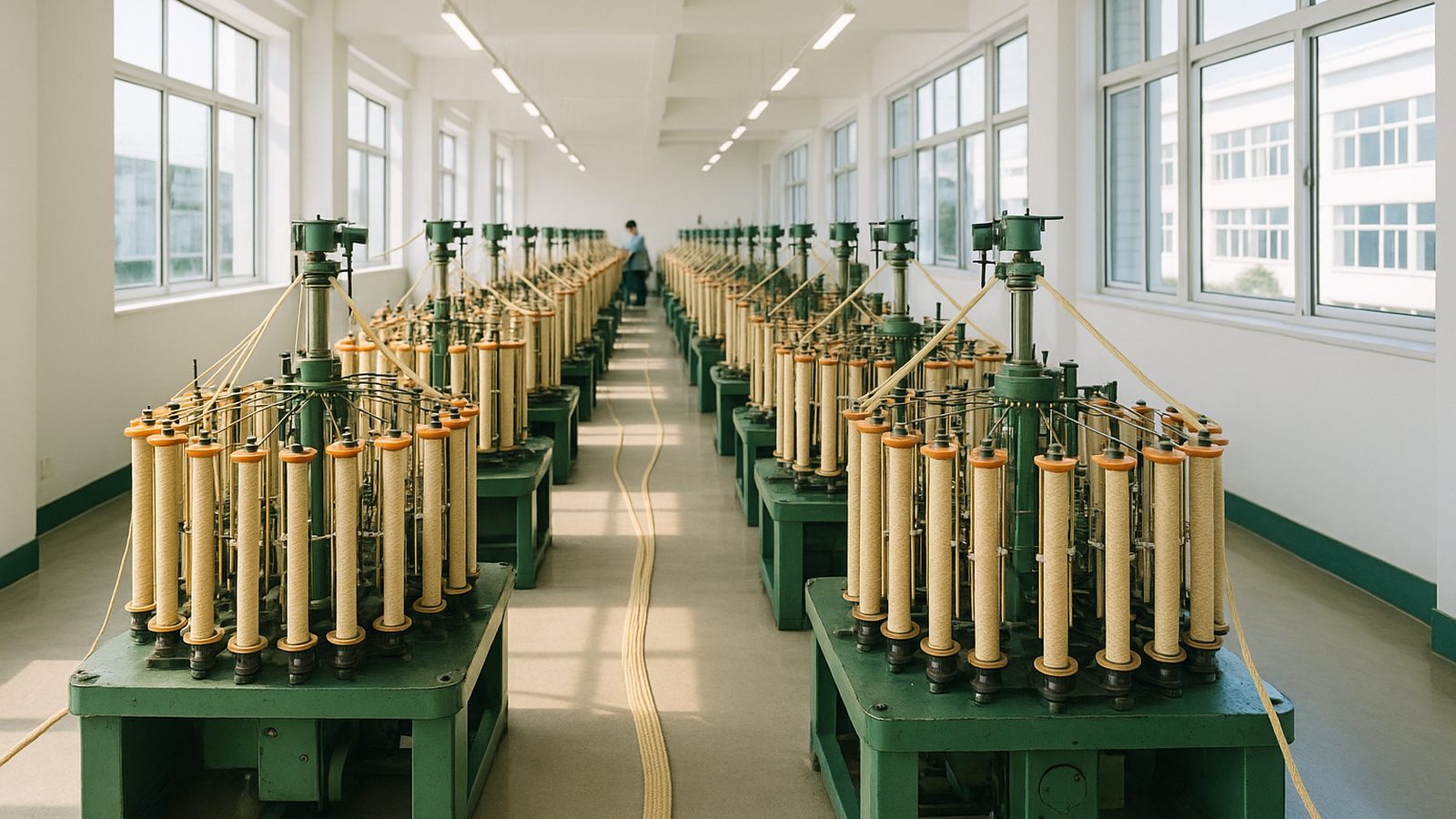
For most of our first two decades, the braiding for our hats was made outside the building. We were a braid hat factory in-house in name only — buying braid from regional suppliers, cutting and stitching it on-site, sending finished hats out to clients in Japan and the United States. In 2012, we changed that. We brought braiding machines inside our Wenling workshop and started making the braid ourselves. Fourteen years on, the decision still defines how we think about our hat collection.
Why a Braid Hat Factory Should Be In-House
The case for outsourcing braid is real. Specialized braid mills cost less to run, sit closer to certain raw-material clusters, and let small workshops avoid capital expense. We worked that way for a long time, and we made good hats. The trouble was control. A braid mill three towns away cannot adjust a weight halfway through a run because a brand partner shifted the spec on Tuesday. By 2012, our customers — the kind of retail and design clients who had begun ordering in their tens of thousands — wanted faster sampling, tighter color matching, and traceability through the braid layer. Outsourcing made each of those harder than it needed to be. An in-house braid hat factory closes those gaps in one step.
What Changed: Waste, Energy, and Lead Time
The numbers we tracked after the retrofit told a clean story. As a braid hat factory in-house, we could cut to order rather than to standard supplier rolls, and material waste from braid trimming dropped by twelve percent in the first full year. Energy per machine in the new braiding cells ran sixty to eighty percent below the older equipment many of our regional suppliers were still using. Lead time on first sample compressed because we no longer waited for a partner's queue. Those three together — waste, energy, time — paid back the capital on the machines faster than our pre-retrofit projections had shown.
What In-House Braiding Lets Us Do Across the Workshop
The point of being a braid hat factory in-house is not the machines. It is what the machines enable upstream and downstream. Upstream, we can source raw natural and synthetic fiber for braid in our own buying window rather than a supplier's. Downstream, the same braid feeds two product lines instead of one: hats first, then our braided bag program, which uses off-cuts and short runs that would otherwise leave the workshop as waste. That second-order use is part of why the twelve percent waste number has held — and in some seasons improved — across the years since.
Fourteen Years In, How Our Braid Hat Factory Has Held Up
The braiding floor in Wenling is not the newest part of our operation; the Phnom Penh facility we opened in 2025 is. But the in-house braid hat factory in Wenling is still the place where our most senior braiders work, and the place where new patterns are proven before they move to either production base. The 2012 decision did not turn us into a different company. It just made the company we already were a little harder to copy. For brands evaluating an OEM or ODM partner in our category, an in-house braid hat factory is still one of the cleanest signals to look for.