From discarded PET bottle to finished hat.
How an rPET hat manufacturer turns recycled bottles into hat yarn — flake, pellet, spun yarn, braid — and the color-lot specs buyers should agree before bulk.
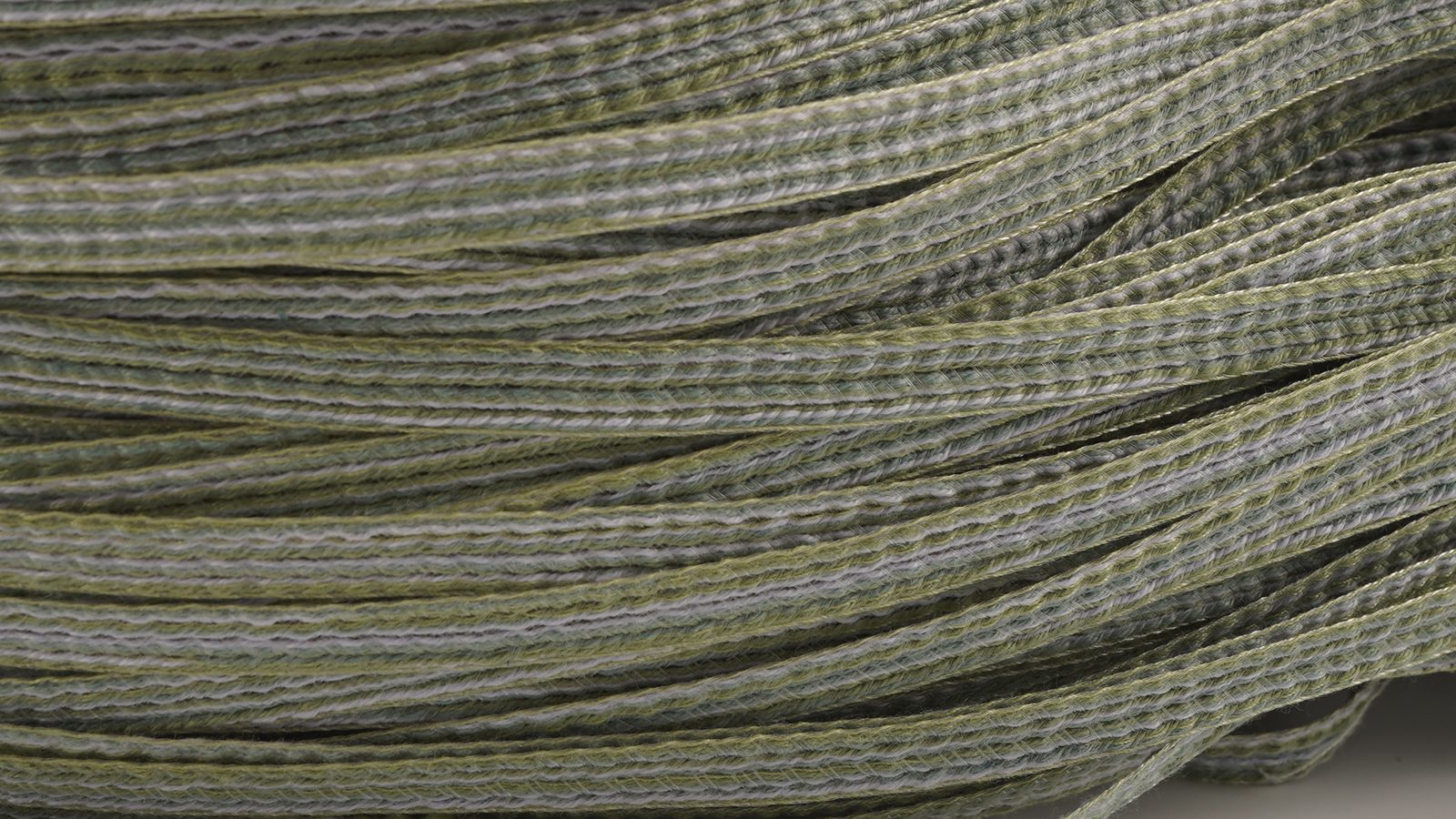
Every rPET hat we ship started life as a beverage bottle. As an rPET hat manufacturer, we spend more of our time on what happens before the yarn reaches the braiding floor than most buyers ever see: bottles become flake, then pellets, then the spun yarn we braid and sew into a finished hat. Recycled polyester now sits beside wheat straw and paper in the 17-material library we keep in Wenling — and it is the most visible material in the +30% shift toward recycled inputs across our product lines.
How Do Recycled PET Bottles Become Hat Yarn?
For an rPET hat manufacturer, the route is mechanical recycling, and it is less exotic than it sounds. Collected bottles are sorted by color, stripped of caps and labels, washed, and ground into clear flake. The flake is dried, melted, and extruded into uniform pellets — the raw currency of the polyester industry. Those pellets are melt-spun into filament and drawn into a high-tenacity yarn that behaves, for most purposes, like the virgin polyester we have worked with for years. From there the process joins the one we use for every synthetic braid: the strand is braided into a flat, continuous strip, and the strip is sewn in a spiral to build a crown and a brim. Five steps — bottle, flake, pellet, yarn, braid — and not one of them is new to a hat factory. What is new is the discipline the feedstock demands.
Why rPET Sits Beside Straw and Paper in Our Material Library
We did not add recycled polyester as a marketing line. It earned its place the way every material in our library does: it survived the braiding machines, the blocking molds, and the sewing lines without special treatment. An rPET braid is colorfast, water-resistant, and crush-resistant — the same working properties that carry the high-volume retail programs in our hat collection. It also belongs to the same engineered-yarn family as the paper yarn we have written about before: in both cases the fiber is designed rather than harvested, which means the specification, not the season, controls the outcome. That is the practical meaning of an rPET hat manufacturer with 17 materials under one roof — recycled polyester is not a separate program with separate rules. It runs on the same lines, the same MOQ structure, and the same sampling window as everything else we make.
What Should Buyers Spec for Color-Lot Consistency?
The honest difference between virgin and recycled polyester, for an rPET hat manufacturer, is the feedstock. Bottles arrive with small variations in clarity and tint, and those variations travel: a flake lot that leans faintly blue will dye differently from one that leans yellow. There are two ways to color the strand — dope dyeing, where pigment enters the melt before spinning, and package-dyeing after — and dope-dyed rPET holds noticeably tighter from lot to lot. So spec accordingly. Reference a Pantone number rather than a photograph. Approve a physical lab dip before bulk. Agree in writing what acceptable variation looks like and under which light source it will be judged. And keep every panel of a single hat within one braid lot — color drift becomes visible not between two orders, but between two panels sewn side by side. A careful rPET hat manufacturer will volunteer these controls; a buyer with a tight tech pack should ask for them anyway.
Where Does the +30% Recycled Shift Go Next?
Recycled inputs across our product lines are up 30%, and no single material is more identified with that shift than rPET. The shift did not start with the bottle: in 2012 we brought braiding machines in-house and cut waste by 12%, which taught us that sustainability gains at a hat factory usually look like process discipline rather than announcements. The next gains for an rPET hat manufacturer sit in the same place — tighter flake sourcing, more dope-dyed programs, and recycled options quoted by default instead of on request. A bottle is a modest starting point for a hat. But of the material questions buyers send us, the ones about rPET now come first — and the answer, from sorting onward, is mostly about control.